


Each year, the WASP PhD Student Council conducts a survey to better understand the experiences, needs, and aspirations of PhD students across all WASP universities. The council is composed of elected student representatives and serves as the voice of the PhD community, raising important questions and providing input to WASP’s decision‑making bodies.
The 2025 survey was open for two months and received 82 responses. While the council hopes for a higher participation rate next year, the results offer valuable insights into what students appreciate and where improvements are needed.
Overall impressions of WASP courses
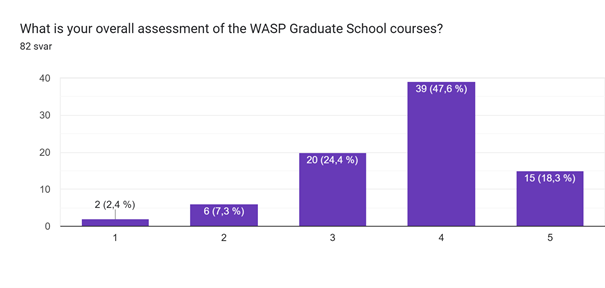
The WASP Graduate School courses continue to be well‑received: Nearly 50% of respondents rated the courses 4 out of 5, indicating strong overall satisfaction.
Students also highlighted several thematic areas where they would like to see more course offerings, including:
- Software engineering
- Robotics and control
- Cybersecurity
- Statistics and optimization
- Philosophy and ethics of AI
- State‑of‑the‑art machine learning, including LLMs
While most students prefer in‑person courses, a significant minority expressed interest in hybrid formats. Notably, 73.3% would like the WASP Ethics course to be offered in a hybrid version.
Summer schools
About 30.9% of respondents participated in a summer school this year. Students suggested a wide range of topics for future editions, reflecting the diversity of WASP research areas:
- Vision‑Language Models (VLMs) and Vision‑Language Agents (VLAs)
- Robotics
- Software engineering
- Mathematics and algorithms
- Statistics
- Neuro‑symbolic AI
- Ethics, philosophy, and societal aspects of technology
Clusters
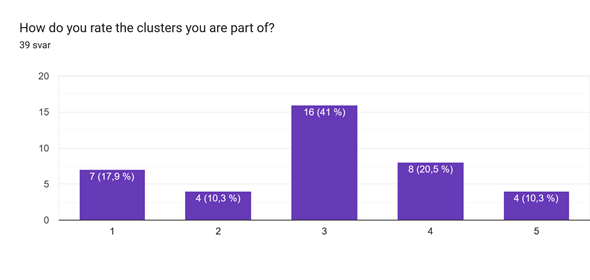
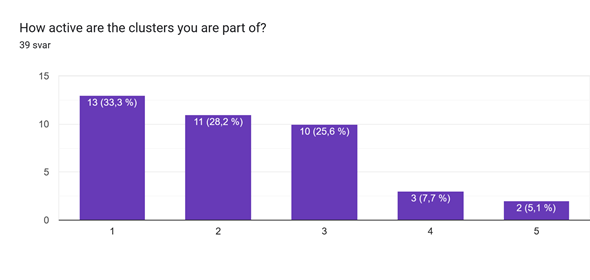
Clusters received a more moderate evaluation, with 41% rating them 3 out of 5. A recurring theme was that many clusters are not sufficiently active, making them less relevant or engaging for students.
Study trips
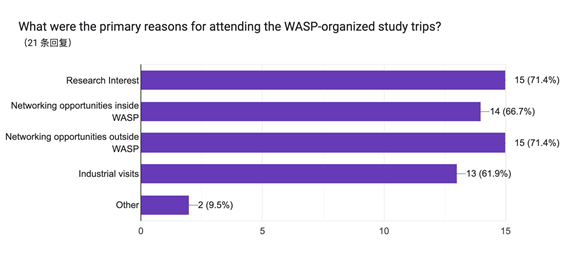
Study trips remain one of the most appreciated components of the WASP program. 90.5% of participants rated their experience 4 or 5 out of 5, and self‑organized or cluster‑organized trips scored even higher at 92.3%.
Students highlighted several ways to further enhance the experience:
- Provide clearer and earlier information about trip content to support informed selection.
- Increase interaction with local PhD students, prioritizing discussions over lectures.
- Improve alignment between visits and students’ diverse research backgrounds.
- Consider eligibility exceptions for students on parental leave, who may otherwise miss opportunities.
Students also emphasized the importance of evaluating the outcomes of study trips—such as whether new collaborations or research links emerge—and how WASP can help students turn contacts into concrete partnerships.
Career aspiration after PhD
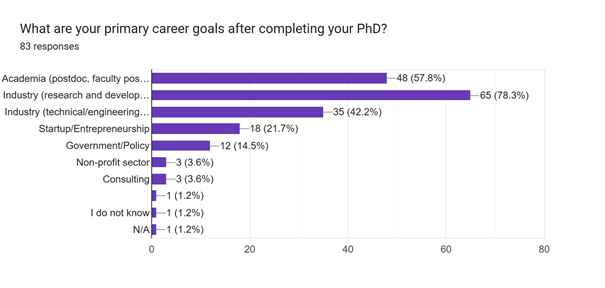
The survey reveals a broad range of career ambitions, with many students considering multiple paths. The top three choices were (multiple choice answer):
- Industry R&D (78.3%)
- Academia (57.8%)
- Industry engineering roles (42.2%)
Encouragingly, 96.2% of respondents said that WASP has had a positive impact on their career development.
Students also shared suggestions for strengthening career and alumni support:
- More guest talks from WASP alumni—and opportunities for alumni to serve as mentors
- Stronger connections with companies, including internships and mentorship programs
- Clearer information about postdoc funding and academic career support
- Better guidance on travel support for short‑term exchanges or internships
- A structured alumni platform for networking, job opportunities, and shared experiences
- Mentorship from alumni who are 3–5 years ahead in their careers
Comments from the Graduate School Management on the results
It is encouraging to see strong interest in additional courses. We are currently preparing two new courses that will be available soon. However, as the current course portfolio is already extensive, our priority is to review existing courses to ensure they remain relevant and up to date before potentially adding more.
Regarding summer schools, several changes have been introduced over the past year to better support students in finding suitable opportunities. For example, it is now possible to exchange a self-arranged study trip for participation in a well-renowned international summer school. The process for WASP-organized summer schools has also been updated, including a call for proposals and the option to include external participants.
It is encouraging to hear that the WASP study trips are appreciated, as they are a key component of the graduate school. Providing earlier and more detailed information about trips would benefit both organizers and participants, and we are working toward this. However, scheduling constraints—particularly when coordinating with highly sought-after hosts—can make early planning challenging. We also aim to include interactive elements, such as poster sessions, and to engage local researchers and students. One way to improve participation could be for attending students and their supervisors to reach out to host contacts in advance, which may facilitate both individual meetings and greater attendance at these sessions. While WASP can support follow-up after trips, the primary responsibility lies with students and their supervisors to maintain and develop these connections.
Finally, based on the evaluation feedback, the rules for eligibility exceptions related to extended leaves have been revised to ensure that, for example, parental or long-term sick leave does not limit participation in the graduate school activities such as study trips.
The council extends a warm thank‑you to everyone who participated and encourages even more students to share their perspectives next year. Your voice helps shape the future of the WASP PhD experience.
Published: March 19, 2026
[addtoany]